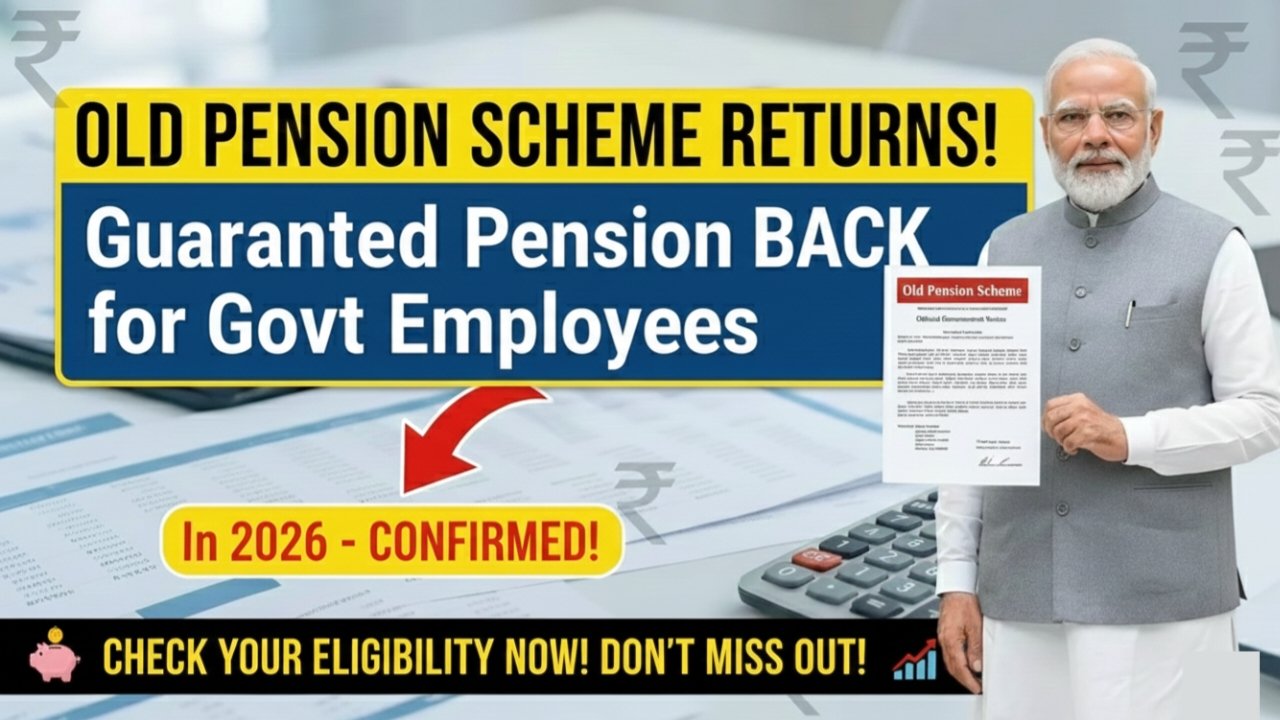
The debate around the Old Pension Scheme (OPS) returning in 2026 has once again captured national attention. Government employees across the country are closely following discussions, hoping for clarity on whether the guaranteed pension system could make a comeback. With rising inflation, market volatility, and long-term financial security becoming major concerns, the possibility of OPS returning has sparked both optimism and confusion.
However, while the topic is emotionally charged and widely discussed, it is important to separate expectations from officially confirmed information. As of now, no formal announcement has been made confirming a nationwide return of the Old Pension Scheme in 2026. What exists instead is an ongoing policy debate, state-level decisions, and proposals aimed at improving retirement security for government employees.
What Is the Old Pension Scheme
The Old Pension Scheme was a retirement system under which government employees received a fixed, guaranteed pension after retirement. The pension amount was typically linked to the last drawn salary and increased with Dearness Allowance revisions, offering protection against inflation.
Under OPS, employees did not need to contribute directly from their salary. The government bore the responsibility of paying pensions, ensuring stable post-retirement income. This predictability made OPS popular among employees, especially those concerned about financial security after retirement.
Why OPS Was Replaced by the New Pension System
The Old Pension Scheme was replaced by the New Pension System (NPS) for central government employees joining service after a specified cutoff year. The primary reason for this shift was fiscal sustainability. As life expectancy increased and the number of pensioners grew, pension liabilities placed a heavy burden on government finances.
NPS introduced a contributory model, where both employees and the government contribute to a retirement fund. The final pension amount depends on market-linked returns, which reduced long-term financial pressure on the government but also introduced uncertainty for employees.
Why OPS Is Back in Discussion
The renewed discussion around OPS stems from concerns about retirement security under NPS. Many employees feel uncomfortable with market-linked pensions, especially during periods of economic uncertainty. The lack of a guaranteed minimum pension has been a major point of concern.
In recent years, some state governments have announced their decision to revert to OPS for their employees, reigniting national debate. These decisions have encouraged employee unions and associations to demand broader reforms at the central level.
Is OPS Really Returning in 2026
At present, there is no official confirmation that the Old Pension Scheme will return nationwide in 2026. Claims of a guaranteed pension being fully restored across all government services remain speculative.
What is more realistic is the possibility of reforms or adjustments to the existing pension framework. Policymakers are exploring ways to balance employee security with fiscal responsibility, which could result in improved pension benefits rather than a complete rollback to OPS.
Government’s Current Approach to Pension Reform
The government has acknowledged concerns raised by employees and pensioners. Discussions have focused on making pension systems more secure, transparent, and predictable. Instead of fully reinstating OPS, authorities may consider strengthening minimum pension guarantees or adjusting contribution structures.
Any major policy shift would require careful evaluation, financial planning, and legislative approval. This process takes time, which is why no immediate or blanket decision should be assumed.
What “Guaranteed Pension” Really Means
The phrase “guaranteed pension” often leads to misunderstanding. Under OPS, the guarantee came from government-backed payments linked to salary and inflation. Under newer systems, guarantees—if introduced—may look different, possibly involving minimum assured returns rather than fixed pension amounts.
Understanding this distinction is important. Even if reforms are announced, they may not exactly replicate the old system but instead create a hybrid approach combining security with sustainability.
Impact on Existing Employees and New Recruits
Any change in pension policy would affect employees differently based on their date of joining service. Existing employees under NPS, state government staff under OPS, and future recruits may fall under separate frameworks.
Clear guidelines would be essential to avoid confusion. Until such clarity is provided through official notifications, employees should avoid relying on unverified claims or social media speculation.
Role of States in the OPS Debate
State governments play a significant role in the OPS discussion. Some states have already implemented OPS for their employees, while others continue with NPS. These state-level decisions contribute to policy diversity but do not automatically apply at the national level.
Central government policies are decided separately and must account for broader fiscal implications, making nationwide changes more complex.
What Government Employees Should Do Now
For now, government employees are advised to stay informed through official announcements and reliable sources. Financial planning should be based on existing rules rather than assumptions about future changes.
Understanding current pension contributions, investment options, and retirement planning tools can help employees prepare regardless of policy outcomes. Any confirmed changes will be communicated through formal government channels.
Conclusion
The question of whether the Old Pension Scheme will return in 2026 remains open, but there is no confirmed decision guaranteeing its nationwide comeback. While discussions and demands continue, employees should approach such claims with caution. The future of pensions is likely to involve reforms aimed at improving security without compromising financial sustainability. Until official announcements are made, informed planning and realistic expectations remain the best course of action.