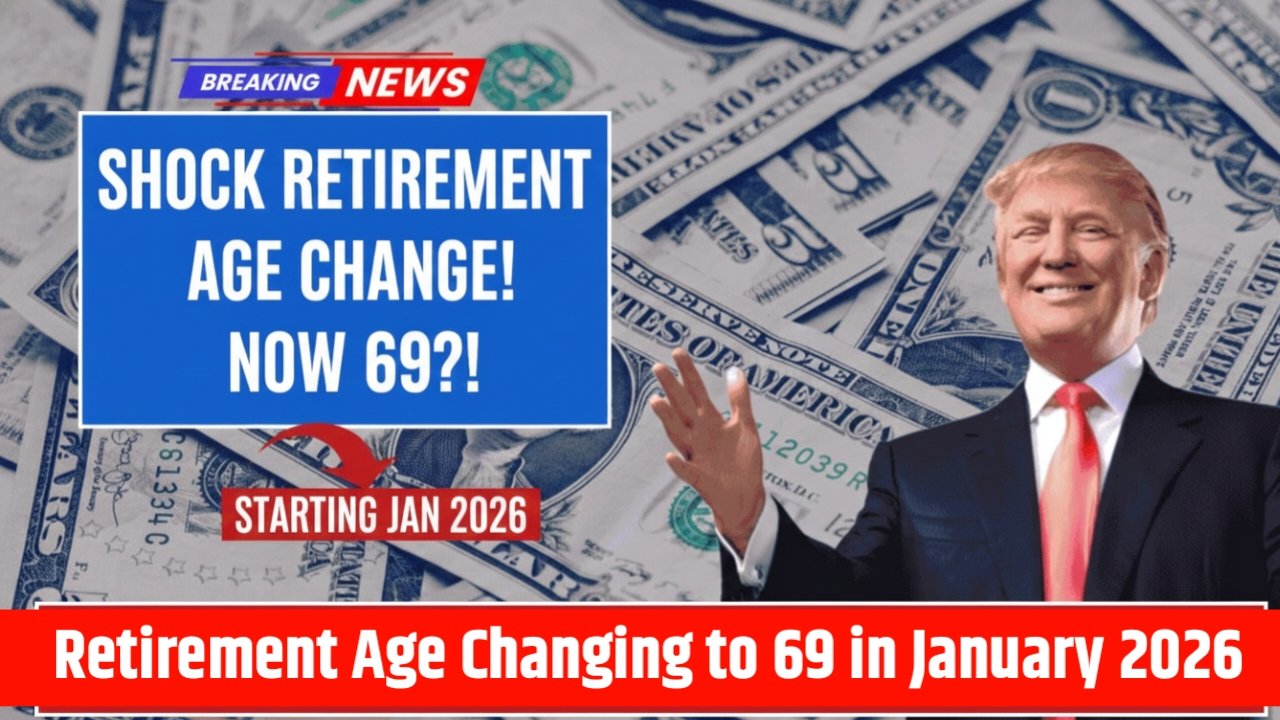
For millions of Americans, retirement is not just a number on a calendar. It represents freedom after decades of work, a chance to slow down, spend time with family, and finally enjoy life without the pressure of a full-time job. That is why any news or rumor about changes to the retirement age immediately creates anxiety. Over the past several months, a claim has been circulating online and in casual conversations: that the U.S. retirement age is set to increase to 69 starting in January 2026. For many people approaching their 60s, this idea feels alarming and deeply personal.
But is this claim actually true, or is it another example of misinformation spreading faster than facts? To understand what is really happening, we need to look carefully at how retirement age works in the United States, where this rumor may have come from, and what—if anything—could realistically change in the coming years.
Understanding How Retirement Age Works in the United States
One of the biggest sources of confusion around retirement age in the U.S. is that there is no single, fixed age that applies to everyone in the same way. When people talk about “retirement age,” they are usually referring to Social Security’s Full Retirement Age, not a mandatory age at which Americans must stop working. In reality, there is no federal law forcing most workers to retire at a certain age. Many Americans continue working well into their late 60s or even 70s by choice, health, or financial necessity.
Social Security’s Full Retirement Age is the age at which you can receive your full, unreduced Social Security retirement benefit. For people born in 1960 or later, that age is currently 67. You can still choose to claim Social Security earlier, starting at age 62, but your monthly benefit will be permanently reduced. On the other hand, if you delay claiming benefits beyond your full retirement age, your monthly payments increase until age 70.
This system is already complex, and that complexity makes it easier for rumors to take root. When people hear phrases like “retirement age increasing,” it often sounds like a sudden, mandatory change, even when the reality is much more gradual and nuanced.
Where Did the Retirement Age 69 Rumor Come From?
The idea that the retirement age will jump to 69 in January 2026 did not come from any official announcement. Instead, it appears to be a mixture of speculation, misunderstood policy discussions, and social media exaggeration. Over the years, policymakers and economists have frequently debated the long-term financial health of Social Security. Because people are living longer and fewer workers are supporting more retirees, experts often discuss possible future reforms, including raising the Full Retirement Age.
These discussions, however, are not the same as enacted policy. When someone hears a proposal mentioned in a hearing or a think tank report and then shares it online without context, it can quickly turn into a firm-sounding claim. Add a specific date like “January 2026,” and the rumor suddenly feels official, even when it is not.
Another reason this rumor spreads so easily is fear. Retirement planning is emotional. People worry about whether they will have enough savings, whether Social Security will still be there for them, and whether the rules will change just as they are about to retire. In that environment, even unverified information can feel believable.
Is There Any Official Plan to Raise Retirement Age to 69 in 2026?
As of now, there is no law, no finalized bill, and no official government announcement stating that the Social Security retirement age will increase to 69 in January 2026. Any change of this magnitude would require congressional approval, public debate, and years of gradual implementation. Historically, when retirement age changes have occurred, they were phased in very slowly over decades, not imposed suddenly on people nearing retirement.
For example, the increase of the Full Retirement Age from 65 to 67 began in the 1980s and is still being phased in today. Lawmakers intentionally designed it that way to give workers time to plan. A sudden jump to 69 in 2026 would be unprecedented and politically explosive, especially considering how many Americans already feel uncertain about retirement security.
That does not mean discussions about future changes are impossible. Policymakers continue to explore many options to keep Social Security solvent in the long term. But discussion does not equal decision, and speculation does not equal law.
Why the Idea of a Higher Retirement Age Keeps Coming Back
Even though the claim about 2026 is false, the broader conversation about raising the retirement age refuses to go away. There are practical reasons for this. Americans, on average, live much longer today than they did when Social Security was first created. When the program began, many people did not even live long enough to collect benefits for very long. Today, retirees may receive benefits for 20 years or more.
From a purely financial perspective, this puts pressure on the system. Some economists argue that gradually raising the Full Retirement Age reflects modern life expectancy and helps keep the program sustainable. Others strongly disagree, pointing out that life expectancy gains are not equal across income levels. Lower-income workers and people in physically demanding jobs often cannot work longer, and raising the retirement age can effectively reduce their lifetime benefits.
This tension—between financial sustainability and fairness—is at the heart of the debate. It is also why any mention of raising the retirement age sparks strong reactions, even when no concrete plan exists.
How Such Changes Would Likely Happen If They Ever Did
If the government ever decided to raise the Full Retirement Age beyond 67, it would almost certainly happen gradually. People already close to retirement would likely be protected, while younger workers would be given many years of notice. This gradual approach allows individuals to adjust their savings strategies, career plans, and expectations.
It is also important to remember that raising the Full Retirement Age does not mean people are forced to work longer. It simply changes the age at which full benefits are available. Early retirement would still exist, though with reduced benefits, and delayed retirement would still offer higher monthly payments.
Understanding this distinction helps reduce some of the fear surrounding these discussions. The system is flexible by design, even if it feels confusing at times.
The Real Risks Facing Future Retirees
While the 69-in-2026 claim is not true, that does not mean retirees have nothing to worry about. The real challenges are quieter and less dramatic, but far more important. Rising healthcare costs, inflation, housing expenses, and the decline of traditional pensions all affect retirement security. Social Security was never meant to be the sole source of retirement income, yet for many Americans, it has become exactly that.
Another concern is misinformation itself. When people base their retirement decisions on false claims, they may panic, delay planning, or make financial choices that hurt them in the long run. This is why separating fact from fiction is so important.
What Americans Nearing Retirement Should Focus On Now
Instead of worrying about unconfirmed rumors, Americans approaching retirement age are better served by focusing on what they can control. Understanding your Social Security options, reviewing your savings, and considering healthcare planning are all practical steps that matter far more than speculative policy changes.
It is also wise to stay informed through reliable sources and official updates rather than viral posts or sensational headlines. Retirement planning is already stressful enough without adding unnecessary fear into the mix.
Why This Rumor Feels So Believable
The reason this claim feels real to so many people is simple: it fits into an existing fear. Many Americans already believe the system is unstable and that the rules will change at the last minute. When trust in institutions is low, rumors fill the gap left by uncertainty.
In that sense, the retirement age 69 rumor is less about policy and more about emotion. It reflects a deep concern about aging, work, and financial security in a rapidly changing world. Understanding that emotional backdrop helps explain why such claims spread so quickly, even without evidence.
The Bottom Line on Retirement Age and 2026
There is no confirmed change raising the U.S. retirement age to 69 in January 2026. While discussions about Social Security reform continue, any real changes would be slow, carefully phased, and publicly debated long before they affect people nearing retirement. The idea of a sudden increase is not supported by current facts.
For now, the most important thing Americans can do is stay informed, remain skeptical of sensational claims, and focus on realistic planning rather than fear-driven speculation. Retirement may be uncertain, but panic is not a plan—and facts remain the strongest foundation for peace of mind.